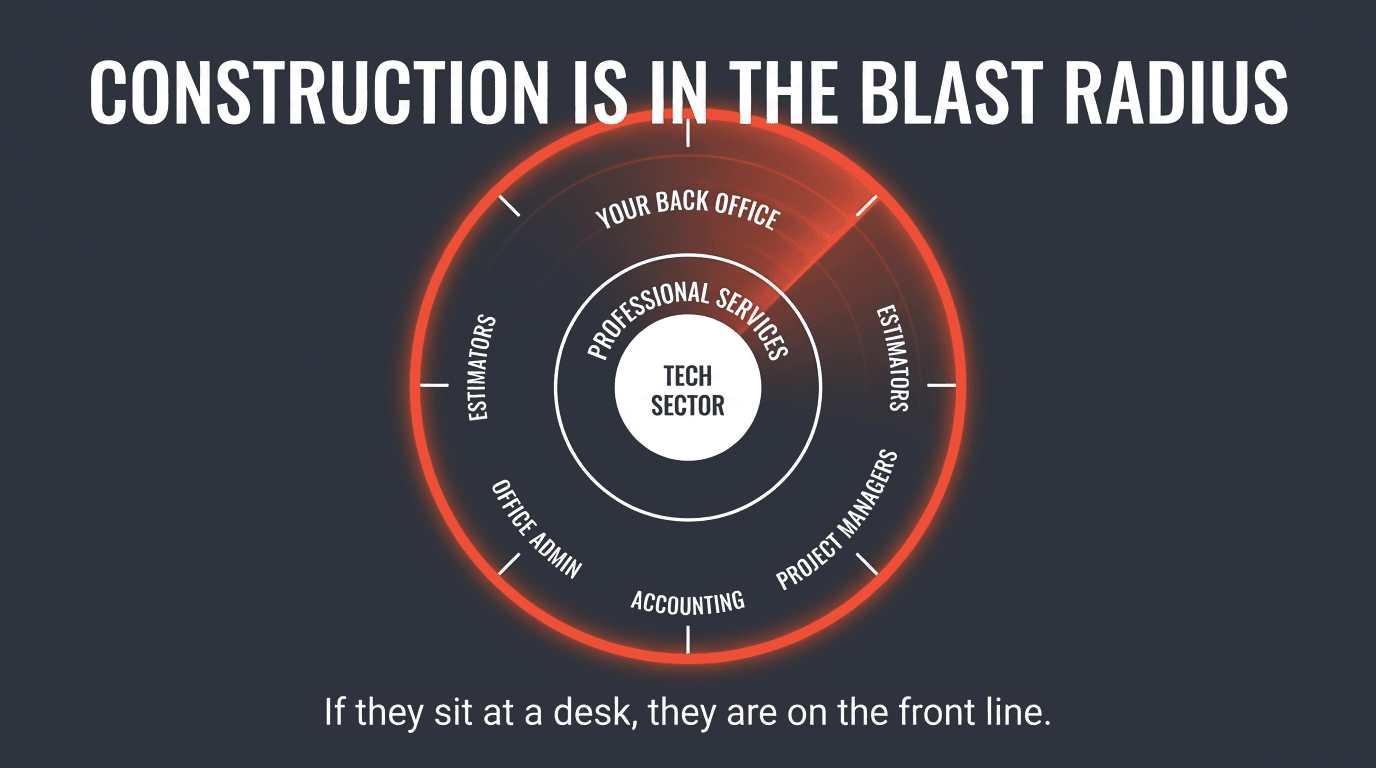
If you run a construction company, you might read the AI headlines and think: that's a tech problem, not my problem. My people are in the field, on rooftops, in trucks. Think again. Your estimators, your PMs, your accounting team, your office managers — they're all white-collar workers. And they're all sitting in the blast radius of what's coming.
Andrew Yang posted a warning this week that should have every business owner paying attention: AI "will kick millions of white-collar workers to the curb in the next 12–18 months." There are 70 million white-collar workers in the United States. Yang predicts that number drops by 20 to 50 percent in the next several years.
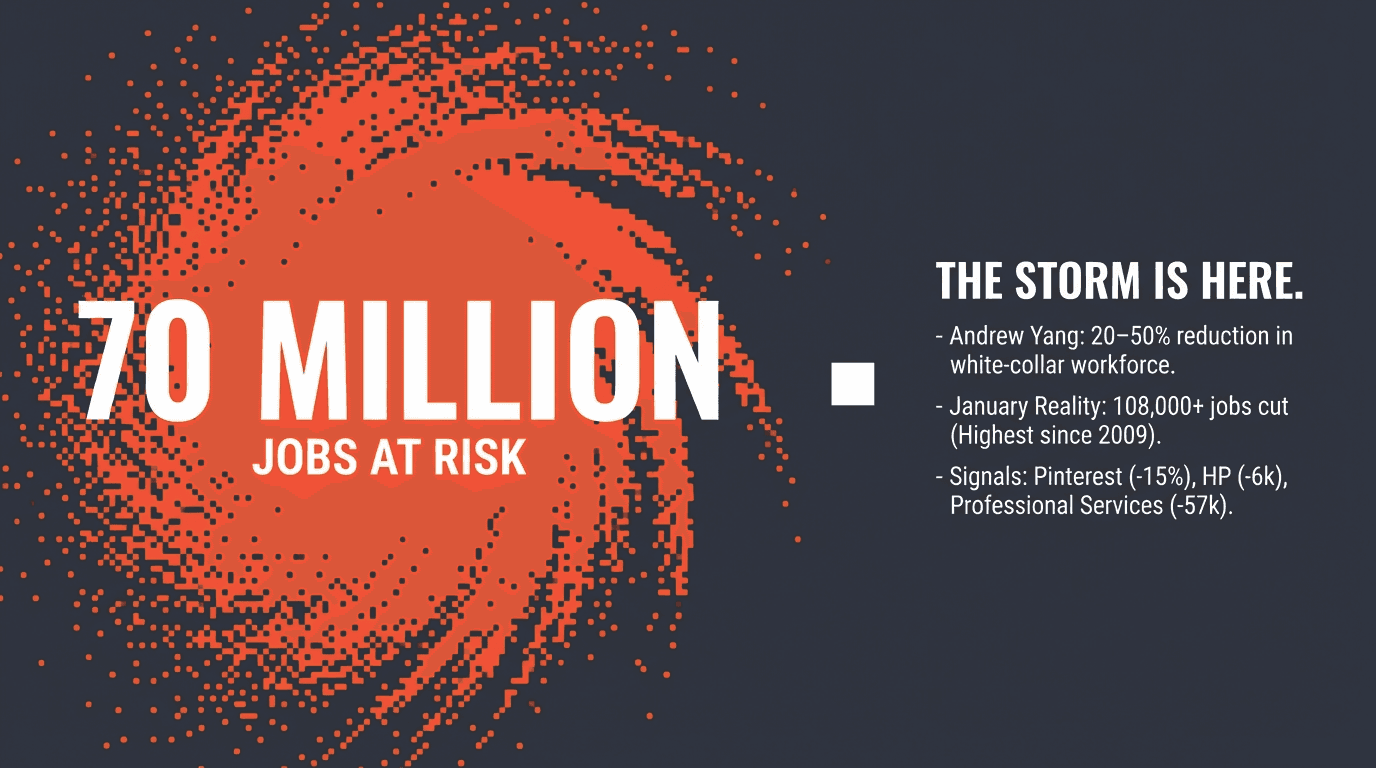
The data is already moving. US employers announced over 108,000 job cuts in January — the highest start-of-year total since the 2009 recession, up 118% year over year. Pinterest is cutting 15% of its workforce for an "AI-forward strategy." HP is cutting 6,000 jobs by 2028. Professional services alone hemorrhaged 57,000 positions in a single month.
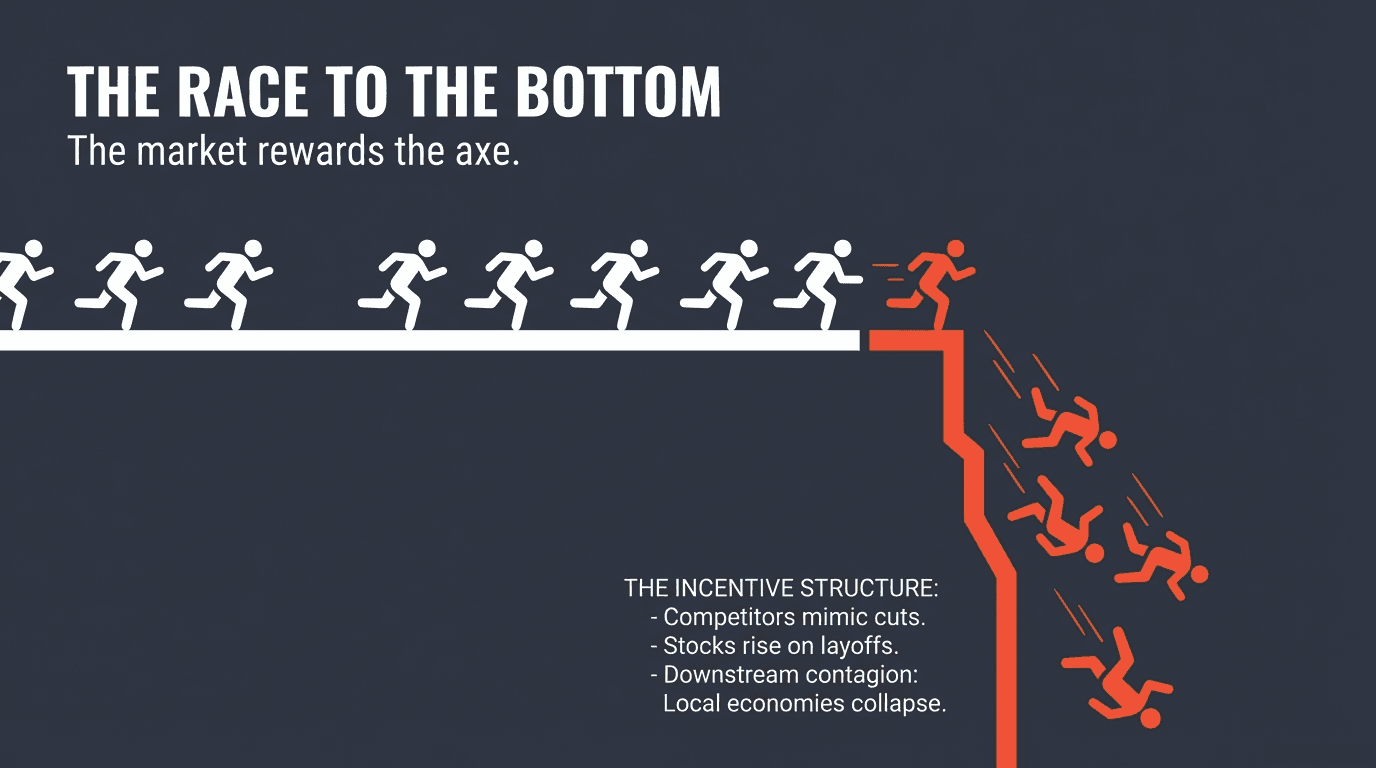
And here's the part that should scare every CEO: Yang says when one company starts cutting, competitors follow — because the stock market rewards you for cutting headcount and punishes you if you don't. It becomes a race to the bottom. And the ripple effects go far beyond the office — dry cleaners, dog walkers, hairstylists, whole downtown economies start to collapse when the offices empty out.
So what's the answer? Yang says UBI, safety nets, retraining programs. Corporate America says cut before your competitor does. Both answers treat people as the problem. One tries to catch them after they fall. The other pushes them off the ledge. Neither one asks the obvious question: what if your people aren't the cost — they're the asset?
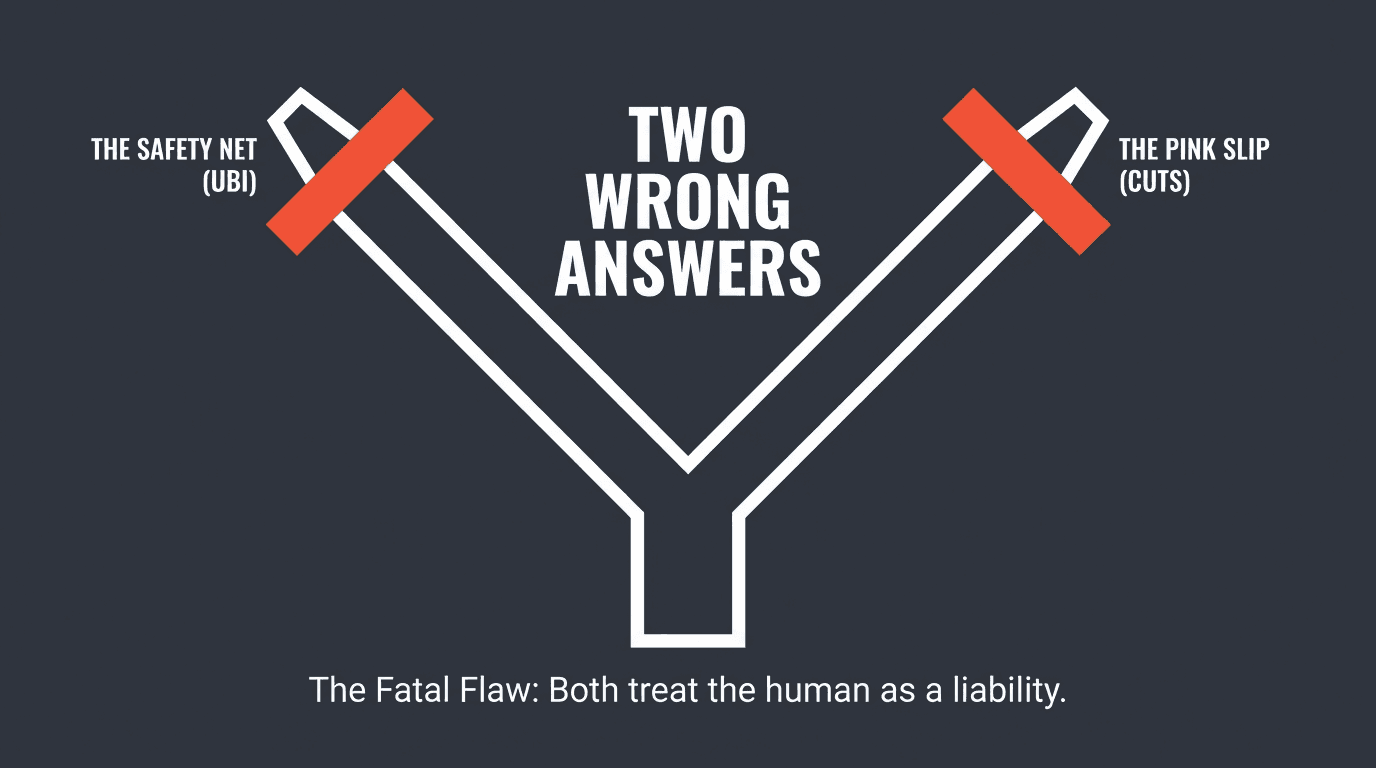
Every time we walk into a new company, someone expects us to come in and "do things for them." Build their apps, run their systems, be their outsourced IT department. Replace the expensive humans with cheap AI. It's the most natural assumption in the world — especially right now, when every headline screams replacement.
That's not what we do. And honestly? If that's what we did, it wouldn't work. We don't replace your people. We make them irreplaceable.
There is no phase where I build 50 apps for 50 people. One person cannot build 50 custom programs. But 50 people can each build one. The only way this scales is if every person learns to build what they need — because nobody knows their job better than they do.
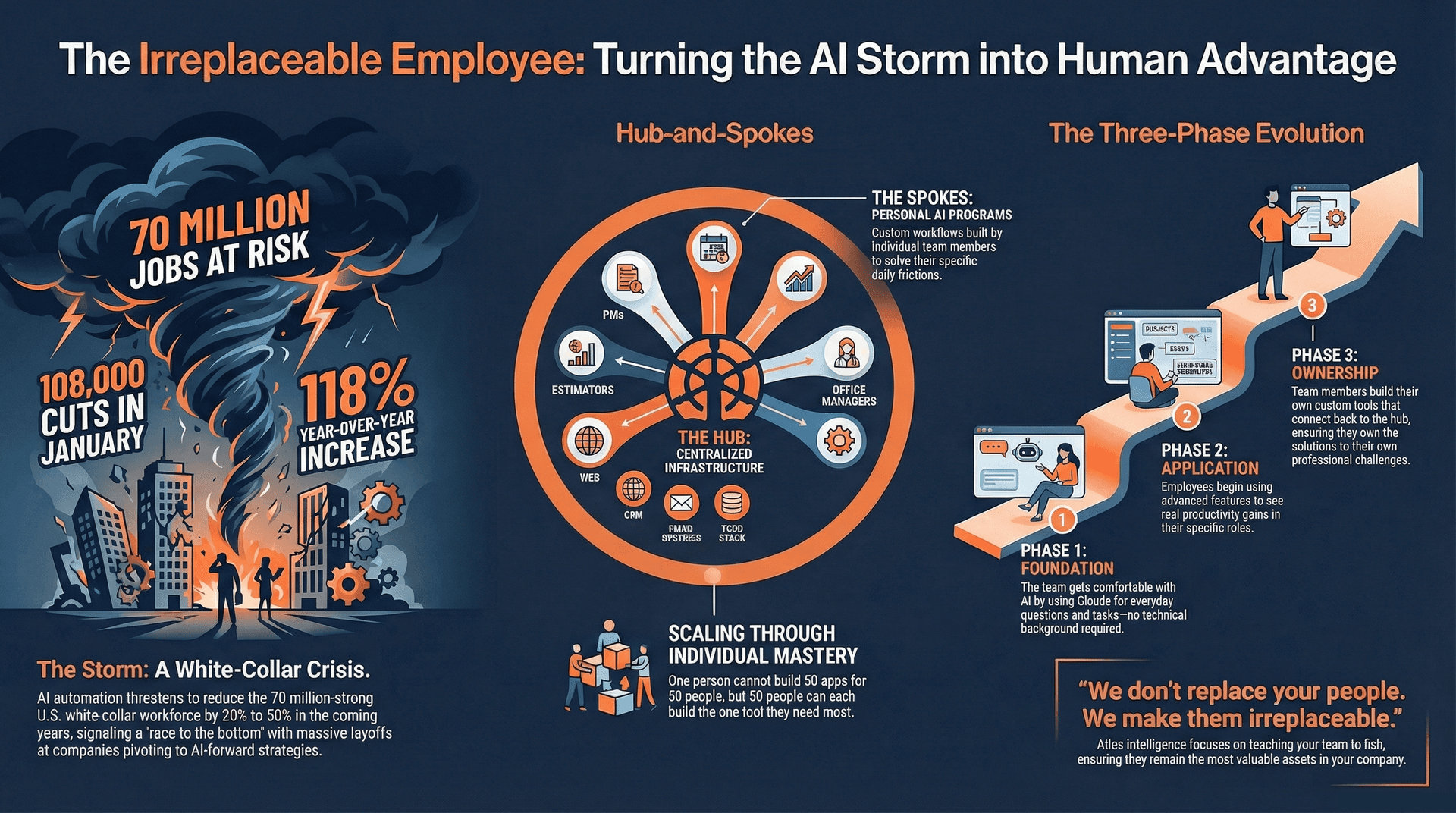
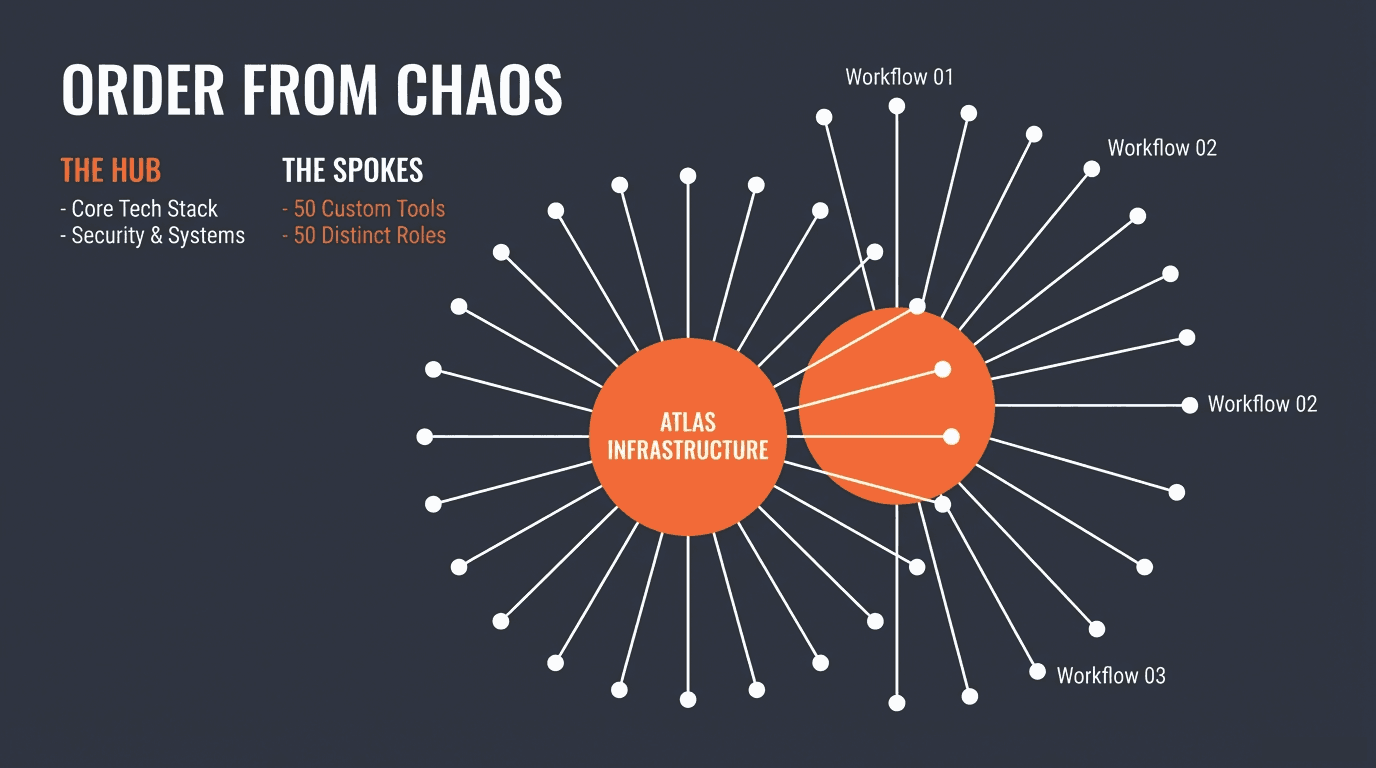
Here's how I think about it. Picture a wheel. The hub is centralized infrastructure — your website, your CRM, your email systems, your core tech stack. That's Atlas's responsibility. We build it, we maintain it, and we make sure it's solid.
The spokes are your people. Every person on the team has their own role, their own workflows, their own daily friction. Each spoke is a personal AI program built for that one person's job. All spokes connect back to the hub. That's what makes it a company, not just a collection of individual tools.
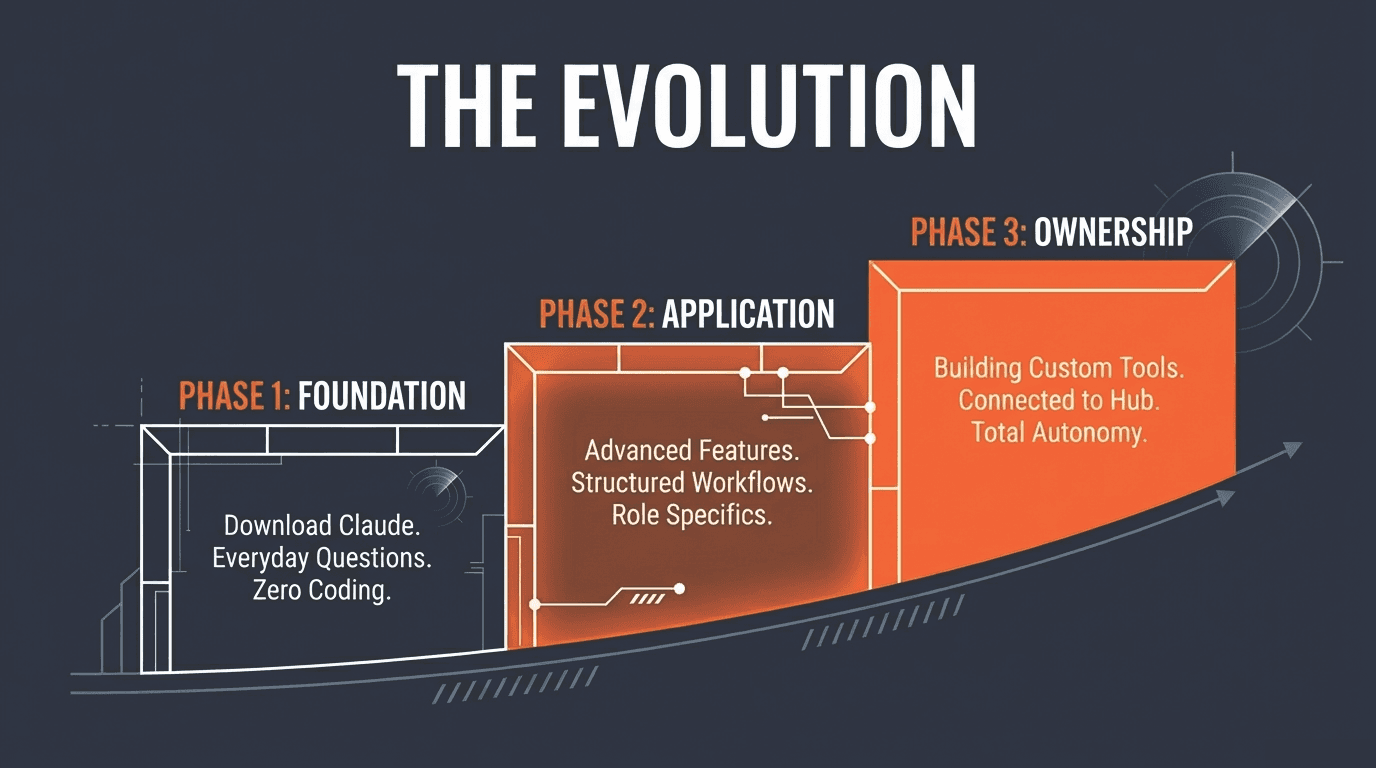
This is a multi-phase rollout, and Phase 1 can start the same day we meet. Phase 1 — Foundation: everyone downloads Claude and starts using it for everyday questions and tasks. No pressure, no coding, no technical background needed. Just get comfortable. This is where the whole team starts together.
Phase 2 — Application: start using advanced features — Projects, Skills, and structured workflows. This is where people start seeing real productivity gains in their specific roles.
Phase 3 — Ownership: team members who are ready start building their own custom tools, all connected back to the hub for security and consistency. Everyone moves at their own pace. And that's completely fine.
The person who answers the phones knows exactly what slows them down. The estimator knows which calculations eat their afternoon. The PM knows which reports take 30 minutes that should take 3. We don't need to learn their job to build their tool. We teach them to build it themselves — and we're right there when they get stuck.
I know AI can sound intimidating. But it has never been more approachable than it is right now. No coding required. No technical background needed. Just type what you need help with and it responds. The people who start now are going to be way ahead by the time Yang's predictions start hitting their industry.
Not everyone needs to be a power user. But everyone needs to be in the boat. Some people will take to this in a week. Others will need a month. The only wrong move is sitting on the shore. We're not handing you sushi — a long wait for a little mouthful. We're teaching you to fish. And once your team can fish, they can feed themselves forever.
Yang is right about the storm. He's wrong that the only options are a safety net or a pink slip. There's a third option: make every person so capable that replacing them would be insane. Atlas Intelligence doesn't just build AI. We build AI companies.
"The End of the Office" — Andrew Yang (Feb 16, 2026) Read the full article →
Ready to see what custom AI can do for your company?
Your construction expertise. Our AI. Let's talk.
Request a demo